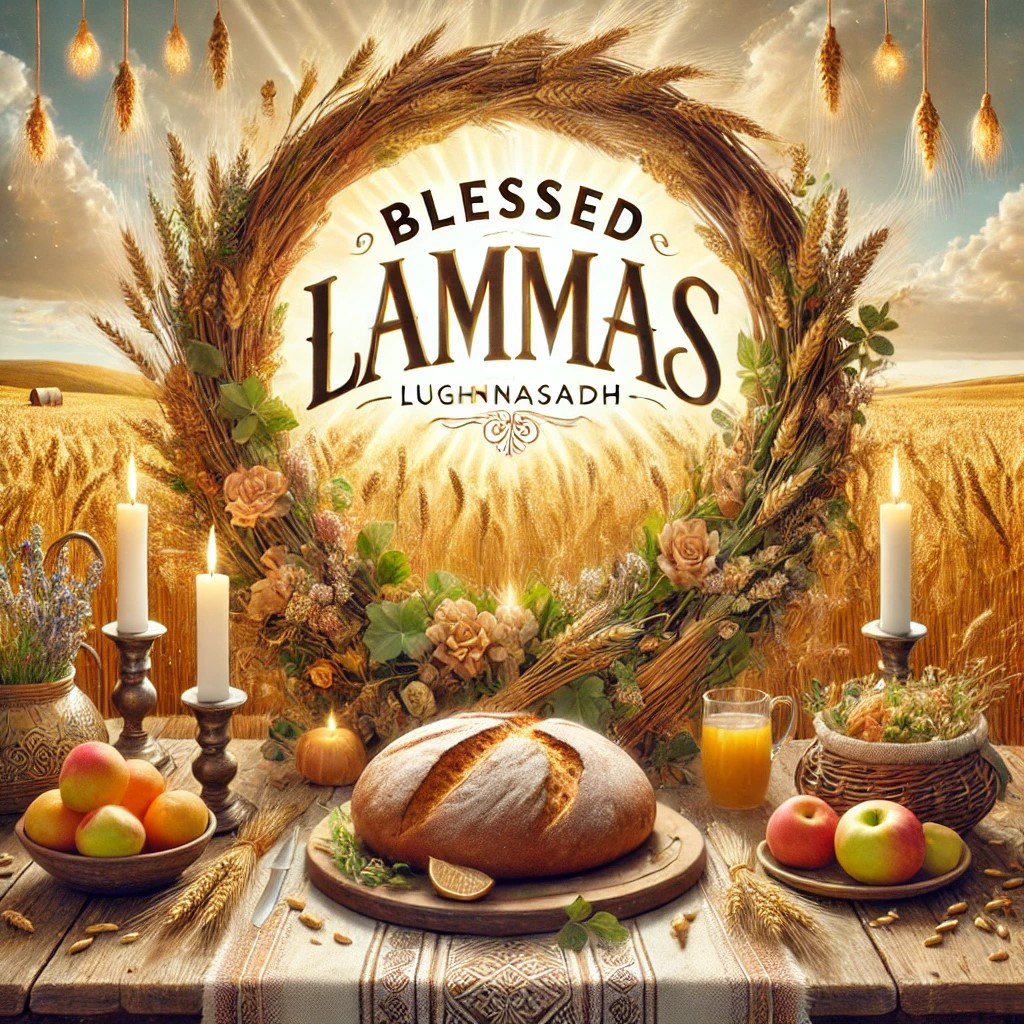
Lammas, also known as Lughnasadh, is one of the eight sabbats celebrated in many Pagan and Wiccan traditions as part of the Wheel of the Year. This ancient festival marks the midpoint between the summer solstice (Litha) and the autumn equinox (Mabon), typically falling on August 1st in the Northern Hemisphere. Lammas holds deep significance as the first of three harvest festivals, celebrating the bounty of the earth and the cycle of life, death, and rebirth.
Historical Origins
The word “Lammas” is derived from the Old English phrase “hlaf-mas,” meaning “loaf mass.” This name reflects the holiday’s agricultural roots and its connection to the grain harvest. In early Christian times, it was customary to bring a loaf made from the new crop to church for blessing on this day.
The Celtic name for this festival, Lughnasadh (pronounced LOO-nə-sə), honors the Irish god Lugh. According to legend, Lugh instituted this festival as a funeral feast and sporting competition in honor of his foster mother, Tailtiu, who died of exhaustion after clearing the plains of Ireland for agriculture.
Themes and Symbolism
Lammas embodies several key themes that resonate with modern practitioners:
- Harvest and Abundance: As the first harvest festival, Lammas celebrates the reaping of grain crops and the abundance of the earth. It’s a time to give thanks for the fruits of one’s labors, both literal and metaphorical.
- Sacrifice and Rebirth: The cutting of the grain symbolizes a kind of death, but with the promise of rebirth in the planting of seeds for the next season. This mirrors the cyclical nature of life and the concept of willing sacrifice for future gain.
- Transformation: Lammas marks a turning point in the year, as summer begins to wane and autumn approaches. It’s a time to reflect on personal growth and transformation.
- Skill and Craft: Honoring Lugh, a god associated with many skills and crafts, Lammas is a time to celebrate human creativity and expertise.
Traditions and Customs
Lammas celebrations often incorporate various customs and rituals that reflect its agricultural heritage and spiritual significance:
- Grain Dollies: Creating corn dollies or wheat weaving is a common practice. These figures, made from the last sheaves of the harvest, are believed to embody the spirit of the grain. They may be kept until the following year to ensure a good harvest.
- Baking Bread: As suggested by the Old English name, baking and sharing bread is a central custom. Many practitioners bake loaves in shapes of the Sun or the God to honor the waning solar year.
- Harvest Feasts: Communal meals featuring seasonal produce, especially grains and early harvest fruits, are popular. Traditional foods might include barley cakes, berries, and summer vegetables.
- Bonfires: Like many Pagan festivals, Lammas often involves the lighting of bonfires. Participants may jump over the flames for purification and blessing.
- Competitions and Games: Echoing the legendary origins of Lughnasadh, some groups organize competitions of skill or athletic prowess.
- Magical Workings: Spells and rituals performed at Lammas often focus on abundance, prosperity, and personal growth.
Modern Celebrations
While the agricultural significance of Lammas may be less immediate for many modern practitioners, its themes continue to resonate in contemporary life. Today, Pagans and Wiccans might celebrate Lammas in various ways:
- Personal Reflection: Many use this time to take stock of their personal “harvest” – the fruits of their efforts in work, relationships, or personal growth.
- Gratitude Practices: Expressing thankfulness for life’s abundance is a common focus, often through rituals or journaling.
- Creative Projects: In honor of Lugh’s association with craftsmanship, some dedicate time to creative pursuits or learning new skills.
- Community Gatherings: Whether online or in person, many groups come together to share meals, perform rituals, or simply enjoy each other’s company.
- Environmental Awareness: Some use Lammas as a time to reconnect with nature, perhaps through gardening, hiking, or participating in conservation efforts.
Lammas in the Wheel of the Year
To fully appreciate Lammas, it’s important to understand its place within the larger context of the Wheel of the Year. This cycle of eight sabbats marks the passing of seasons and the eternal dance of light and darkness.
Lammas follows Litha (the summer solstice) and precedes Mabon (the autumn equinox). It’s part of the waning year, where the days gradually grow shorter. This placement gives Lammas a bittersweet quality – it’s a celebration of abundance, but also an acknowledgment that the vibrant energy of summer is beginning to ebb.
In the narrative of the God and Goddess often used in Wiccan traditions, Lammas sees the God in his strength as the Lord of the Harvest, but also approaching his sacrifice. The Goddess is seen in her Mother aspect, abundant and nurturing.
This sabbat begins the harvest trilogy in the Wheel of the Year, followed by Mabon (the second harvest, often associated with fruits) and Samhain (the final harvest and the New Year in many Pagan traditions).
Correspondences and Associations
For those who incorporate magical practices into their observance of Lammas, understanding its correspondences can enhance rituals and spellwork:
Colors: Gold, orange, yellow, and brown, reflecting the hues of ripening grain fields.
Herbs and Plants: Wheat, barley, oats, meadowsweet, mint, sunflower, and all grains.
Incense and Oils: Frankincense, sandalwood, rose, aloe.
Stones: Aventurine, citrine, peridot, sardonyx.
Animals: Roosters, calves, deer, dogs.
Deities: In addition to Lugh, deities associated with grain, agriculture, and the harvest are often honored. These might include Demeter, Ceres, John Barleycorn, and various corn mothers or grain goddesses.
Integrating Lammas into Modern Life
While the agricultural basis of Lammas may seem distant to many in our modern, often urban society, its core themes remain deeply relevant. Here are some ways to integrate the spirit of Lammas into contemporary life:
- Mindful Consumption: Use this time to reflect on where your food comes from. Consider supporting local farmers or trying your hand at growing some of your own produce.
- Professional Growth: In our career-oriented society, Lammas can be a time to assess your professional “harvest.” What seeds did you plant earlier in the year? What fruits are you reaping now?
- Skill Development: Honor the craftsmanship aspect of Lammas by dedicating time to learning or improving a skill. This could be anything from a traditional craft to a modern professional skill.
- Community Service: Embody the abundance of the harvest by sharing with others. Consider volunteering or donating to a food bank.
- Environmental Awareness: Use Lammas as a reminder of our connection to the earth. This could involve participating in conservation efforts or simply spending more time in nature.
- Creative Expression: Channel the creative energy of the season into art, writing, music, or any form of self-expression.
Challenges and Controversies
As with many Pagan observances, the celebration of Lammas is not without its challenges in the modern world:
- Seasonal Disconnect: For those in urban environments or climates where grain isn’t a major crop, the harvest theme may feel less immediate.
- Hemispheric Differences: Pagans in the Southern Hemisphere often celebrate Lammas in February, aligning with their local seasons. This can create a disconnect with the larger Pagan community, which is predominantly Northern Hemisphere-centric.
- Cultural Appropriation Concerns: As with many Pagan practices that draw from various cultural traditions, there are ongoing discussions about appropriation, particularly regarding the incorporation of Native American or other indigenous practices.
- Secularization: Some Pagans struggle with maintaining the spiritual significance of Lammas in an increasingly secular world.
Conclusion
Lammas stands as a testament to the enduring human connection to the cycles of nature and the fruits of our labors. Whether celebrated as a religious observance, a seasonal milestone, or simply a moment for gratitude and reflection, Lammas offers valuable insights for contemporary life.
In our fast-paced, often disconnected modern world, Lammas invites us to pause and acknowledge the abundance in our lives. It reminds us of the importance of community, the value of our skills and efforts, and our intrinsic connection to the natural world.
As the wheel of the year turns, Lammas teaches us to honor the present moment – to celebrate our current harvest while recognizing it as part of a larger cycle of growth, decline, and renewal. In doing so, it offers a profound perspective on the ebb and flow of life itself, encouraging us to find meaning and joy in the eternal dance of seasons, both in nature and in our personal journeys.
For many contemporary witches, Lammas holds significant meaning that goes beyond its historical agricultural roots. While practices and interpretations can vary widely depending on individual beliefs, traditions, and geographical locations, here are some common themes:
- Personal Growth and Achievement: Modern witches often view Lammas as a time to reflect on personal progress. They might take stock of goals set earlier in the year, celebrating accomplishments and reassessing areas for further growth. This could involve journaling, meditation, or creating vision boards to visualize their “harvest” of achievements.
- Gratitude and Abundance: Lammas is frequently seen as a time to practice gratitude for life’s abundance. Witches might create gratitude rituals, perhaps writing down things they’re thankful for and burning the paper in a Lammas fire to release that energy to the universe. Some may choose to perform abundance spells or create charm bags filled with symbols of prosperity.
- Honoring Skills and Creativity: In the spirit of Lugh, the many-skilled god, witches often use Lammas to honor their own skills and creativity. This might involve dedicating time to a craft, learning a new skill, or teaching others. Some covens or groups might organize skill-sharing workshops as part of their Lammas celebrations.
- Connection to Nature: Even for urban witches, Lammas serves as a reminder of our connection to the natural world. Many use this time to attune themselves to the changing seasons, perhaps by spending more time outdoors, working with seasonal herbs in spellcraft, or simply observing the subtle shifts in their environment.
- Community and Sharing: Lammas emphasizes community and sharing the fruits of one’s labor. Modern witches might organize gatherings (virtual or in-person) to share meals, exchange homemade goods, or perform group rituals. Some may choose to volunteer or donate to their local community as a way of embodying this spirit of sharing.
- Sacrifice and Letting Go: The concept of sacrifice – cutting down the grain to ensure future growth – resonates with many modern witches. They might use Lammas as a time for releasing what no longer serves them, perhaps through ritual burning of symbolic items or performing cord-cutting spells.
- Balancing Work and Rest: As Lammas marks the beginning of the harvest season, it reminds witches of the importance of balancing work and rest. Many use this time to reflect on their work-life balance and set intentions for a more harmonious approach.
- Ancestor Veneration: Some witches use Lammas to honor ancestors, particularly those who worked the land. This might involve creating ancestor altars, leaving offerings, or incorporating family recipes or traditions into their celebrations.
- Eco-Magical Practices: With growing awareness of environmental issues, many modern witches incorporate eco-magical practices into their Lammas observances. This could include rituals for environmental healing, working with plant spirits, or renewing commitments to sustainable living.
- Adaptive Celebrations: Modern witches often adapt traditional Lammas customs to fit urban or digital lifestyles. For instance, baking bread might be replaced with any act of kitchen witchery, or traditional bonfires might become candle rituals for apartment dwellers.
- Self-Care and Renewal: Some witches view Lammas as a time for self-care and personal renewal. They might perform cleansing rituals, take ritual baths with seasonal herbs, or do energy work to align themselves with the season’s transformative energies.
- Magical Timing: For witches who time their spellwork to natural cycles, Lammas is seen as a powerful time for magic related to abundance, prosperity, career success, and personal power.
It’s important to note that practices can vary widely among different traditions and individual practitioners. Some witches may observe Lammas as part of a structured religious practice, while others may take a more eclectic or personal approach. The key is that Lammas provides a seasonal touchstone for reflection, celebration, and magical work, allowing modern witches to connect with natural cycles and ancient traditions in ways that are meaningful to their contemporary lives.
Blessed Be
Where you can find Patti
https://www.facebook.com/pattipetronemiller/
Discover more from Patti Petrone Miller
Subscribe to get the latest posts sent to your email.
