Welcome to Harriet Whitmore
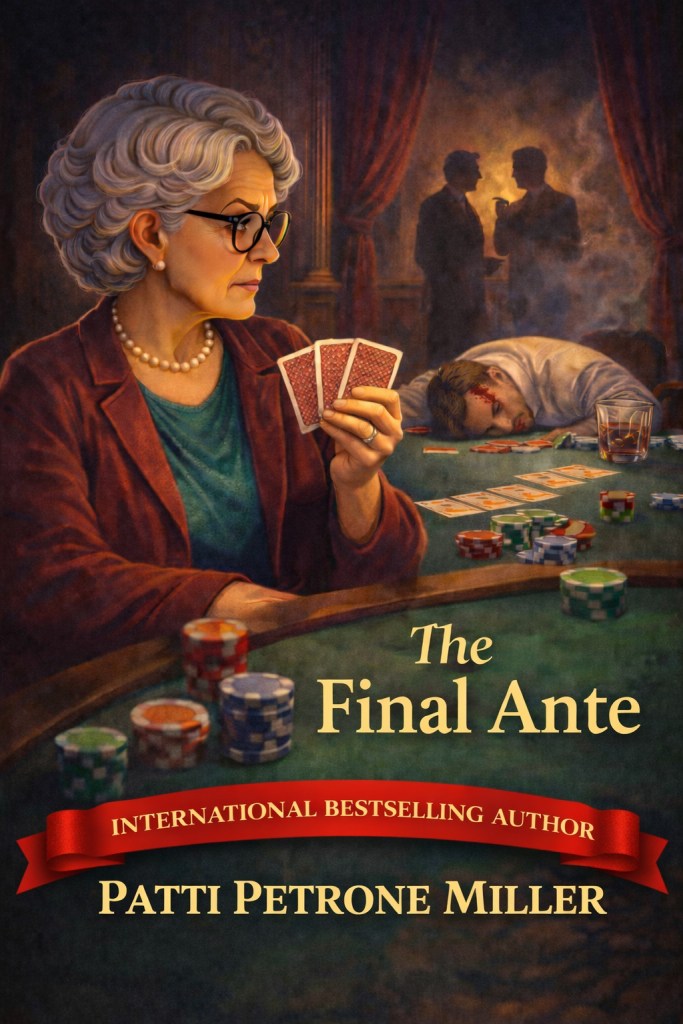
I’m thrilled to introduce you to Harriet Whitmore and the first book in what will be a seven-book series.
The Velvet Mask Murder is really the beginning of Harriet’s story. It’s where we meet her—a woman who’s spent nearly fifty years as a professional caterer, working in impossible kitchens at exclusive events across Manhattan. She’s good at what she does. She’s reliable. She notices things. And she’s about to stumble into a world she never expected to enter.
When she’s hired to cater opening night at the Riverside Theater, it seems like just another event. A new play called “The Velvet Mask,” a packed house, a small backstage kitchen. Harriet has done this a hundred times before. But this time, something goes wrong. A lead actress ends up dead during intermission, and Detective Pattison needs Harriet’s help to understand what happened.
That’s really where the series begins. Not with Harriet being a detective or crime solver. But with her discovering that her ability to read people, to notice what others miss, can actually matter in ways she never imagined.
Over the next seven books, we’ll follow Harriet as she navigates this new part of her life. We’ll see how she balances her catering work with helping Pattison solve crimes. We’ll meet the people she works with. And we’ll understand how an ordinary woman becomes someone who solves murders.
This first book is the introduction. It’s where Harriet’s real journey begins.
I hope you’ll come along for the ride.
Chapter One: The Small Kitchen Problem
Harriet Whitmore stood in the backstage kitchen at the Riverside Theater three days before opening night and felt the walls closing in.
Not that she’d say so to Madeline Burns, who was standing in the doorway holding a coffee cup like it might break if she gripped it any tighter. Medeline’sknuckles were white. Her jaw was clenched. She was already stressed about something, and the event hadn’t even started yet.
“It’s impossible,” Madeline said, staring at the small space with her shoulders pulled up toward her ears. “Look at it. There’s barely room to turn around. How am I supposed to feed four hundred people using this?”
“You’re not,” Harriet said, running her hand along the worn counter. “I am. And I’ve worked with worse.”
She had too. She’d catered a wedding reception in Denver once using a stove the size of a shoebox. People always thought that was a lie until she described it in detail. The bride’s mother had decided two weeks before the wedding to move the entire reception from an upscale hotel to her cousin’s house. The kitchen had been so small that Harriet had to walk sideways between the stove and the refrigerator. But she’d made it work. She’d made beautiful food in impossible spaces for forty-eight years. This kitchen was just another impossible space.
Madeline was the president of the theater board. She wore expensive clothes that probably cost more than most people’s monthly rent. She had the kind of confidence that came from making a lot of money in business, from running a company, from being the person in charge. But she had no idea how to run a kitchen. You could tell by the way she was looking at the space. Like it was a puzzle she couldn’t solve.
“The pre-show reception is two hundred people,” Madeline said, pulling up information on her phone. Her eyes scanned the notes like she’d written them down multiple times and memorized them. “Seven o’clock start. Thirty minutes of service, and then everyone goes into the theater for the eight o’clock curtain.”
“What kind of appetizers are you envisioning?” Harriet asked.
Madeline looked up from her phone. “Something that doesn’t make people look stupid while they’re eating.”
“So nothing that requires two hands,” Harriet said.
“Exactly.” Madeline looked back at her phone, scrolling through what appeared to be pages of notes. “Act one is forty minutes long. Then intermission. Twenty minutes. Then the second act is thirty-five minutes. Then curtain call and transition to the post-show celebration.”
Harriet was already mentally dividing the kitchen space into zones. The stove area could handle meat preparation. The counter by the window could become a plating station. The small prep table could be used for vegetable work. It would be tight. It would require perfect coordination between her and her team. But she could make it work.
“I can do this,” Harriet said. “But I need to understand exactly what you want. Not what you think you want. What you actually want.”
Madeline set down her coffee cup on the aging Formica counter. The cup clinked softly against the surface. She wrapped her arms around herself, her fingers gripping her own elbows.
“The play is called ‘The Velvet Mask,'” Madeline said. “It’s brand new. An original work. The playwright has been developing it for a decade. A full decade of her life poured into this one production. Opening night is a big deal. It’s the kind of event that gets reviewed in the major publications. It defines a season. I want every element of this night to communicate that level of seriousness and artistic achievement.”
“So not the standard endive with goat cheese,” Harriet said.
“God, no.” Madeline shook her head. “Something that shows culinary skill. Something that makes people pause and think about what they’re eating. Something that makes them understand that someone cared about every detail.”
Harriet nodded. She was already thinking about possibilities. Endive spears with herbed goat cheese was a better choice, candied walnuts, and fresh raspberries. It was simple enough to produce in the quantity they’d need, but the combination of flavors and the careful balance of sweet and savory would elevate it above what people expected. Each one would be a work of art.
“There’s one more thing,” Madeline said. Her voice changed. It became quieter. Less professional. More worried. She looked away from Harriet, out the small kitchen window toward the theater’s exterior. “And I probably shouldn’t mention it, but I think you should know if you’re going to be here for the entire event.”
“What is it?” Harriet asked.
“The cast is a mess,” Madeline said. She turned back to look at Harriet directly. “There’s romantic drama. Financial problems. People who don’t like each other. There’s an actor who’s having an affair with the lead actress, and her ex is also in the production. It’s like a soap opera backstage.”
“That’s theater,” Harriet said.
“Yes, but it’s more than that.” Medeline’sfingers were digging into her own elbows now, her nails leaving marks. “I’m worried that something is going to happen. Something bad. I can feel it. There’s a tension backstage that’s different from normal opening-night energy. It feels dangerous. It feels like something is going to blow up.”
Harriet listened carefully. She’d learned over her decades of catering work that when a client was genuinely frightened about something, it was worth paying attention to.
“I want you to pay attention,” Madeline continued. “You’re going to be here all night. You’re going to see things. You’re going to hear things. People forget that caterers exist. They talk freely around you. They reveal things they wouldn’t reveal to people they’re trying to impress. You have a gift for understanding people, Harriet. I’ve seen you do it at other events. If something seems wrong, if something seems dangerous, I want to know about it.”
Harriet didn’t love the idea of spying on people. It felt dishonest. It felt like a violation of the implicit understanding that existed between a caterer and the people she served. Caterers were supposed to be background people. Invisible. Present but not intrusive.
But she also understood that Madeline was genuinely frightened. The way her voice had changed when she said “if something seems dangerous” suggested that she wasn’t just concerned about professional conflict or romantic drama. She was concerned about actual safety.
“I’ll pay attention,” Harriet said finally. “But I’m not going to gossip. That’s not who I am. If something happens that seems important for the sake of the event itself, something that affects how the evening will proceed, I’ll tell you. Beyond that, what I hear backstage stays backstage. That’s my condition.”
Medeline’s shoulders dropped slightly. She unclenched her arms and let them fall to her sides.
“That’s fair,” Madeline said. “Thank you, Harriet. I appreciate your discretion. And I appreciate your willingness to be aware.”
As Madeline left the kitchen and returned to the lobby, Harriet stood alone in the small backstage space and thought about what she’d just agreed to. She’d been catering events for nearly fifty years. She’d worked for hundreds of clients. But very few of them had asked her to observe and report on what was happening around her. It suggested that Madeline Burns, for all her business success and her polish and her confidence, was genuinely frightened of something.
Harriet made a mental note to pay attention during the event. Not to spy, as she’d said. But to observe. To notice things that might seem significant. To understand the undercurrents that existed beneath the surface of theatrical professionalism.
It was a promise she would come to understand was far more important than she realized.
Chapter Two: Harriet’s Team Arrives
On opening night, Harriet arrived at the Riverside Theater at five o’clock in the afternoon. The sun was beginning to descend toward the horizon, casting long shadows across the street in front of the building. The October air was cool. It made the back of Harriet’s neck prickle slightly.
She brought her team with her. Denise was there, of course. Denise was Harriet’s granddaughter and had been working with her for the past six years. She was twenty-six years old, possessed of an almost supernatural ability to manage complex situations without showing stress, and had the kind of calm presence that made other people instinctively trust her. Today she was dressed in dark pants and a white blouse that looked professional but comfortable. Her dark hair was pulled back in a tight ponytail.
David arrived just behind them. David was a chef with five years of experience working alongside Harriet. He was a tall man with careful hands and an almost meditative approach to food preparation. He moved slowly through the world, like he was thinking about something important all the time. Today he looked anxious. His jaw was tight. He kept rubbing the back of his neck.
Priya came last. Priya was younger than David, probably twenty-three, still developing her skills, still learning how to manage the pressure of professional cooking. But she had good instincts. She didn’t panic when things got complicated. She understood that mistakes happened and that what mattered was how you recovered from them. Today she was bouncing on the balls of her feet, clearly excited. Her eyes were wide. She kept smiling.
“This is really happening,” Priya said as they moved through the backstage corridors toward the kitchen. She was carrying a stack of white serving platters and looking around with obvious fascination, like she was walking through a museum. “We’re actually catering opening night at a real theater. This is so much cooler than the corporate events we usually do. Those are always in hotel ballrooms or country clubs. Everything looks the same. But this is different. This is art. This is culture.”
“The corporate events pay better,” Denise said, but she was smiling. Denise preferred interesting work to comfortable work. She’d turned down several job offers from established catering companies because the work seemed predictable and uninspired. She liked events where something interesting might happen. She liked working with people who cared deeply about what they were doing.
“Money isn’t everything,” David said. It was his standard response to practically everything. David had become a chef because he loved the work itself, not because he wanted to become wealthy. He’d turned down offers to work at several high-end restaurants because he preferred the flexibility and variety of freelance catering work. He liked the challenge of working in different spaces, with different equipment, solving different problems.
The backstage kitchen was exactly as small as Harriet had remembered from her assessment three days earlier. But she’d made her plan during that visit. She knew precisely where everything would go. She could see it in her mind like she was looking at a finished painting.
The kitchen had a four-burner stove that was slightly older than Harriet would have preferred but that seemed to be in working condition. There was a refrigerator that hummed audibly and that had a dent in the side. There was a small prep counter that was about three feet long. There was a slightly larger work counter that had a permanent stain on the surface. There was a sink with good water pressure. It wasn’t ideal. But it was workable. She’d worked with less.
Harriet set her equipment bag down on the floor and took a deep breath.
“All right,” she said, falling into the role she’d performed hundreds of times before. She clapped her hands together once, a sharp sound that made everyone look at her. “This is what we’re doing tonight. David, you’re handling the pre-show appetizers. I want everything plated and ready to go by six forty-five. That gives us a fifteen-minute buffer if anything goes wrong.”
David nodded. He was already assessing the space, understanding what equipment was available to him, calculating how he would organize the work. His lips were pressed together in a thin line. He was nervous. Harriet could see it in the way he was holding his shoulders.
“Priya, you’re on the intermission buffet components,” Harriet continued. “Everything needs to be prepped, measured, and ready for final assembly during the first act. Vegetables need to be cleaned and cut. The salmon needs to be prepared and ready for the oven. The coq au vin needs to be made ahead and held at the right temperature. I’ll have you start on that right now, before the pre-show service even begins.”
“Got it,” Priya said. She was already moving toward the prep counter, rolling up her sleeves.
“Denise, you’re going to be our eyes and ears in the lobby,” Harriet said. “You need to understand where things need to go and when they need to be there. You need to manage the flow of food from the kitchen to the tables. You need to watch how people are receiving what we’re serving. You need to feel the energy of the room and report back to me.”
“I can do that,” Denise said. She was watching Harriet carefully, understanding the weight of responsibility that came with the role she’d been given.
“What are you doing?” Priya asked.
“Quality control,” Harriet said. “And observing the cast, since apparently that’s now part of my job description.”
“You’re spying on people,” David said. But he said it with a slight smile, suggesting he understood why Harriet would do this if she’d agreed to do it.
“I’m observing,” Harriet corrected, using the same distinction that Madeline had used. “There’s a difference. There’s a big difference between spying and simply paying attention to what’s happening around you.”
By six o’clock, the theater was beginning to fill with people. Harriet could hear the ambient noise of the lobby from her position in the kitchen. Voices. Laughter. The clink of champagne glasses. The particular sound of anticipation. The audience was arriving. The energy of opening night was building in the theater like pressure behind a dam.
She was standing at the counter, arranging endive spears with the kind of precision that came from decades of professional practice. Each spear received exactly the right amount of herbed goat cheese. She was using a small spoon to portion it, making sure each one was identical. Each one got a single candied walnut positioned at the precise angle that would provide visual balance. She’d made the candied walnuts that morning, coating them in a mixture of cinnamon, nutmeg, and brown sugar, then roasting them until they were caramelized and fragrant.
Each endive spear got a single fresh raspberry that had been selected for its size and color. She was particular about the raspberries. Some of them were too soft. Some of them were not ripe enough. She examined each one before placing it on the spear.
“These are beautiful,” Priya said, pausing for a moment to appreciate the work. She was holding a knife in one hand, mid-cut on a carrot. “I mean, they’re really beautiful. They look like something from a fancy restaurant.”
“Beautiful doesn’t matter if they don’t taste good,” Harriet said. “The taste matters most. But if they look beautiful and taste beautiful, then you’re communicating that someone cared about every element. You’re telling a story with the food.”
She was positioning the final raspberry on the final endive spear when the kitchen door opened and a man appeared in the doorway.
He was tall, probably in his mid-forties, with dark hair that was beginning to gray at the temples. He was wearing his costume for the second act, which was an elaborate period outfit that suggested the late eighteenth century. The outfit was beautiful. Someone had spent considerable time creating it. But he was wearing his regular clothes on his upper half, which created an odd effect. His upper body was dressed in a button-up shirt that had been hastily thrown on. His lower body was already in character.
His face was pale. There were dark circles under his eyes. His jaw was clenched so tight that Harriet could see the muscle twitching in his cheek.
“Is there water?” he asked. His voice was pleasant, but there was something underneath it. Something strained. The way a person’s voice sounds when they’re hiding something. “Or pain reliever? I seem to have developed the most appalling headache.”
“In the break room,” Harriet said, gesturing toward a small anteroom where the theater staff kept coffee and emergency supplies. She was observing him carefully without appearing to observe him. The way his hands were curled slightly, like they might form into fists at any moment. The way his breathing seemed shallow. “Through that door. There should be ibuprofen in the cabinet over the sink.”
“Thank you.” The man stood there for a moment, not moving immediately. He was looking at the work that was being assembled on the platters. The endive spears were arranged in perfect circles on a white ceramic plate. They were beautiful. They looked expensive.
“This looks extraordinary,” he said finally.
“Thank you,” Harriet said. She watched him walk toward the break room, watching carefully. The way his jaw was clenched. The way his hands were slightly curled into fists. The way his movements portrayed he may have been under a tremendous amount of stress.
Once he had left the kitchen, David turned to Harriet.
“That was Thomas Kaine,” David said quietly. His voice had dropped to barely above a whisper, like he was sharing a secret. “The other major actor. He’s in most of the scenes with Vivienne Cordova, the lead. I overheard some of the stagehands talking about them. Someone said they’re having some kind of an arguement.”
“What kind?” Harriet asked.
“The romantic kind, I think. Or maybe the used-to-be-romantic-and-now-it’s-awkward kind. They were saying something about Vivienne and Thomas being together for a while, and now it’s all weird. Theater people always have drama. It’s like they live in a constant state of soap opera.”
Harriet filed this information away in her mental notebook. Thomas Kaine. The other major actor. Having a headache that seemed more like stress than a medical condition. Having a situation with Vivienne Cordova, the lead actress. That was interesting information. That was the kind of information that Madeline had wanted Harriet to gather.
But it was also information that Harriet understood might become significant in ways she couldn’t yet anticipate.
“Continue prepping,” Harriet told her team. “And if you notice anything that seems unusual or important, make a mental note of it.”
David and Priya exchanged glances but didn’t say anything. They turned back to their work.
By six-thirty, the lobby was full. The theater was packed. Harriet could hear Madeline Burns’s voice from somewhere out front, welcoming guests and making sure everyone had champagne. The board president was doing what board presidents did. She was managing the impression. She was making sure that everyone felt welcomed and important.
Harriet could also hear the orchestra warming up. They were clearly going to start playing once the pre-show reception got fully underway, creating the kind of sophisticated background noise that made events feel special and important.
The first course of appetizers went out at six-thirty-five. David and Priya carried them into the lobby on white ceramic platters, moving with the kind of care that suggested they understood the importance of what they were doing. The endive spears looked beautiful against the white plates. They looked like they belonged in a restaurant or a gallery opening, not at a theater event.
And almost immediately, Harriet heard the murmur of appreciation that told her guests were enjoying her food.
At six-forty, while the pre-show reception was still in full swing, another cast member appeared in the kitchen.
She was younger than Thomas Kaine. Probably in her early thirties. She had dark hair that was pulled back in a practical style and had red-rimmed eyes, which initially made Harriet think she’d been crying. But then Harriet realized it was probably just dramatic makeup. Theater makeup was always heavy. It was always designed to be visible from the back of the theater.
The woman moved through the backstage space. She was clearly looking for something, or someone. Her head was turning as she looked around and her hands were clenched at her sides. She was breathing rapidly. She was looking for someone that was evident.
“Is Vivienne back here?” she asked. Her voice had an edge to it. A desperate quality. “I need to find her. Have you seen her?”
“No,” Harriet said simply. She’d learned early in her catering career that sometimes it was better to answer questions at face value without adding additional information that might complicate things or create additional drama.
“If you see her, tell her that Lady Scarlett needs to talk to her,” the woman said. Her hands unclenched and then clenched again. Over and over. “It’s important. Tell her I’ve been looking for her.”
Then she left, moving back into the backstage corridors with urgency.
“That was Lady Scarlett,” David said. He was becoming quite the unofficial theater gossip expert. His eyes had lit up when he saw her. “She’s an understudy in the production. Or something like that. I overheard the stagehands talking about her. They said something about her wanting a bigger role and Vivienne not giving it to her. Something about promises that were made during the audition process.”
“Do you know what kind of promises were made?” Harriet asked.
“I don’t know exactly,” David said. “Something about being an understudy and whether Vivienne was actually following through on the commitments she’d made. Theater politics, probably. People make promises they can’t keep, and then things get complicated when someone calls them out on it.”
Harriet made a mental note of what she’d just witnessed. Lady Scarlett, the understudy, had been searching for Vivienne with an obvious sense of urgency. Whatever she needed to discuss seemed important. Another clue. Another indication that there was tension simmering beneath the surface of this production. But what did Lady Scarlett want to tell Vivienne so badly?
By six-fifty, all the pre-show appetizers had gone out into the lobby. They had disappeared quickly, which was a good sign. So far so good.
The theater was packed. Harriet heard the audience settling in, their voices filling the space with anticipation and opening night energy crackled through the building.
Then, at exactly seven o’clock, the house lights dimmed. The audience began to settle. The orchestra finished their warm-up and began the overture.
The play had begun.
Chapter Three: Intermission Preparations
“Let’s make sure the intermission buffet is ready,” Harriet said once the house had quieted and the play was fully underway.
The first act was forty minutes long. Harriet and her team had thirty-five minutes to set up the intermission buffet. They needed to arrange the salads so they looked good. Slice the salmon. Plate the coq au vin. Get the duck breast cut to the right temperature. Finish the cheese and charcuterie board. Everything had to look perfect.
It was like choreography—everything had to happen at exactly the right moment. Harriet had done this a hundred times before. But it never stopped being nerve-wracking. What if they ran out of time? What if something wasn’t ready when they needed it? What if she’d messed up the timing?
She shook off the worry and got to work, making sure everything happened exactly when it needed to.
“David, the herb-crusted salmon needs another six minutes in the oven,” Harriet said, checking the oven temperature. She understood the quirks of this particular oven already. It ran slightly hot. The temperature distribution wasn’t perfectly even. But she’d calculated for those factors. “Check it at the five-minute mark. If the top isn’t golden yet, we’ll give it another minute. But no more than that. We don’t want it to dry out.”
“Got it,” David said. He was standing by the oven, watching through the small window, making mental notes about the color of the salmon skin. His shoulders were less tense now.
“Two more minutes,” Priya said. She was focused on plating the dish, positioning the vegetables and sauce just right. Her tongue stuck out as she concentrated, her hands moving carefully to get everything exactly where it needed to be.
“I’m trying to get the sauce consistency right,” Priya continued. “It’s been sitting in the warming chamber, and I don’t want it to have reduced too much. Some of the other plates are looking thin.”
“I’m worried the sauce reduced too much in the warmer,” Priya said. “Look at these plates—the sauce is getting thin.”
“Don’t worry about it,” Harriet said. “The sauce is what makes the dish work. It’s not just about taste. It makes everything look good. It shows people that we actually know what we’re doing.”
Denise appeared in the kitchen doorway. She was dressed as a server, ready to manage the buffet flow once the first act ended and intermission began. She had a small clipboard in her hand and was always taking notes thinking ahead.
“How are we doing?” Denise asked. Her eyes moved around the kitchen, assessing what was happening,
“We’re good on time,” Harriet said. She was putting together a salad, arranging the microgreens and vegetables like she’d done a thousand times before. The vinaigrette went on, the colors looked right, and she moved on to the next plate without even thinking about it.
“The play sounds good. The audience seems engaged.”
“The audience is into it,” Denise said. She wasn’t the type to lie—if things sucked, she’d say so. “The playwright’s sitting in the third row crying. I think that means it’s working.”
“That’s a very good sign,” Harriet agreed.
They worked quietly. Everyone knew what to do. It was smooth. They’d done it so many times it was automatic.
At seven thirty-five, applause came from the theater. The first act was over. The audience was going crazy. People actually liked the show.
Twenty-five minutes. Harriet had done the math before the show—how long each task would take, some extra time for emergencies. Now she was just hoping it all worked out.
“Everything needs to be ready to go in the next five minutes,” Harriet said. “David, how’s the salmon looking?”
“Perfect,” David said, plating the fish. Each one looked beautiful. The salmon was the right color, cooked perfectly. He made it look easy.
“The color is perfect. The flesh looks moist. This is good salmon.”
“It’s excellent salmon,” Harriet said. “We’re using a small producer upstate. Harriet was finishing up the salads when she heard shouting backstage. Not in the kitchen—somewhere else back there. In the dressing rooms or the green room or something.
Two people were arguing.
“Don’t,” a male voice said. It sounded like Thomas Kaine. The actor with the headache. The actor who was having problems with Vivienne Cordova. “Don’t do this. Not tonight. Not before the second act.”
“Then when?” A female voice. Angry. Sharp. Harriet didn’t recognize it immediately, but she suspected it was Vivienne. “When is the right time to discuss the fact that you’ve been lying to me? When do we finally have a conversation about what you’ve actually done?”
“This isn’t the place,” Thomas said. His voice had dropped lower, more controlled, but underneath the control was something else. Fear? Guilt? Something more complicated?
“This is the only place,” Vivienne said. Her voice was rising. She was becoming angrier. “Because you avoid every other place. You avoid every conversation. You avoid every consequence of what you’ve done. And I’m tired of protecting you. I’m tired of pretending that this is some kind of beautiful romantic story when really it’s just you lying to me repeatedly.”
“If you care about this production at all, if you care about the people in this cast, if you care about the artist who wrote this play, you’ll wait until after the performance to have this conversation.”
“Why?” Vivienne’s voice had taken on a sharp, bitter quality. It was the voice of someone who had reached the end of their patience. Who was done making excuses. Who was done protecting someone else’s secrets. “Why should I wait? So you can figure out what to say? So you can craft another story? So you can convince me again that you didn’t do what I know you did?”
Then it went quiet. Someone had walked away. The fight wasn’t resolved it just stopped.
Denise and Harriet exchanged a look. Then Harriet caught David and Priya’s attention. They all got it without needing to say anything. What they’d just heard wasn’t meant for them. It wasn’t just a couple’s fight. Thomas had done something, and Vivienne was threatening to expose it.
“Buffet service begins in ninety seconds,” Harriet said finally, maintaining her professional tone despite the information her mind was processing. “Let’s focus on what we’re doing. We have an audience expecting excellent food, and we’re going to deliver that.”
The kitchen shifted focus. The work became more urgent. But Harriet found that part of her attention remained on what she’d overheard. What had Thomas done? What was Vivienne angry about? Why was she threatening to expose something? What had Thomas promised her? What had he lied about?
These were pieces of a puzzle. Harriet didn’t know what the complete picture would look like yet. But she understood that something significant was happening beneath the surface. Something that went beyond romantic conflict or professional jealousy.
Something darker.
Chapter Four: The Second Act and Discovery
At seven-forty, the house lights came up fully. Intermission had been officially called. The audience began to move through the theater. Some people headed toward the lobby for refreshments. Some people stretched in their seats, using the break to adjust their positions. Some people headed to the restrooms.
And Harriet’s team went into action with the kind of synchronized movement that came from hundreds of hours of working together.
David and Priya took the salads out to the lobby. They looked great. Denise watched the buffet table, making sure everything stayed organized and looked good as guests started eating.
Harriet finished plating the coq au vin, salmon, and duck breast. Each plate looked good—the sauce pooled right, the salmon was sliced perfectly, the duck was arranged nicely. She was completely focused on getting everything just right.
That’s when Margaret Walsh appeared in the kitchen doorway.
Margaret Walsh, the artistic director, appeared in the doorway. She was in her sixties, dressed well but practically. But something was wrong. She looked genuinely worried—the kind of worry that came from a real problem, not opening night nerves.
“Harriet Whitmore?” Margaret asked, even though she was clearly addressing Harriet directly. Margaret was looking at Harriet carefully, studying her as though trying to understand something about her.
“Yes?” Harriet looked up from the duck she was plating. She set down her fork on the edge of the plate.
“Madeline mentioned you might be stopping by the dressing rooms at some point during the event,” Margaret said carefully. She was wringing her hands. Over and over. Twisting her fingers together. “Checking on how people were managing. Making sure everyone had what they needed. I wanted to make sure you knew where my office was. There are some pieces of the theater’s history back there. Photographs. Playbills from famous productions that have played here over the years. I thought you might be interested in taking a brief tour during the second act, if you had a moment.”
It was a strange request. Harriet had been hired to cater the event. She’d been hired to handle the food service and the kitchen operations. She wasn’t supposed to be touring the building. She wasn’t supposed to be looking at old photographs and memorabilia. That wasn’t part of her job description.
But Harriet also understood that sometimes people made requests that weren’t quite logical because they were stressed about something and looking for some kind of human connection or conversation. Maybe Margaret wanted to talk to someone. Maybe Margaret needed someone to understand something about her. Maybe Margaret was trying to communicate something without being direct about it.
“That’s kind of you,” Harriet said carefully. “But I should stay focused on the food service. There’s a lot to manage during the second act, and I need to be available if anything goes wrong. Perhaps after the event, if there’s time, I could look at your office.”
“Of course,” Margaret said. She stood there for a moment longer, as if she wanted to say something else but couldn’t quite find the words. Her hands stopped wringing. Her jaw tightened. Then she turned and left, moving back into the backstage corridors.
“That was odd,” David said once Margaret had gone. He was standing near the prep counter, watching Margaret leave. “Why would the artistic director want to give a tour to a caterer?”
“Everything about tonight is odd,” Denise said, checking on the food. “Theater people just operate differently. They’re more emotional. They live in drama. So what seems weird to us is probably normal to them.”
Harriet didn’t understand. Why was Margaret asking her to see her office? What did old photographs have to do with anything?
At seven-fifty-five, the house lights began to dim again. Intermission was ending. The audience began to settle back into their seats, returning from the lobby where they’d been eating and socializing, preparing for the second act to begin.
And Harriet, David, Priya, and Denise had thirty seconds to make sure the buffet was fully stocked and ready for the guests who had chosen to eat during intermission rather than afterward.
“Okay, the salads are gone,” Denise said from the buffet, watching the guests. “And people are loving the salmon. They’re actually stopping to eat it instead of just grabbing stuff.”
“How’s the coq au vin?” Harriet asked.
“Moving slowly,” Denise said. “But that’s okay.
By eight-oh-five, most of the guests had gotten what they wanted from the buffet. The table was still full, but the crowd had begun to thin out. The audience was filtering back into the theater. The second act was beginning.
The intermission service went perfectly. Harriet took thirty seconds to feel good about it. Then she moved on to prepping the post-show food.
But the whole time she was working, she kept thinking about Thomas and Vivienne. About what she’d heard them arguing about. Thomas had done something. Vivienne was tired of keeping his secret.
The second act continued in the theater. Harriet could hear the faint sound of dialogue. The actors were performing the emotional climax of the play. They were reaching the moments that would determine whether the entire production succeeded or failed.
The second act had ended successfully.
The curtain call was coming. The actors would take their bows. The audience would express their appreciation.
And then the celebration would begin.
But none of that was going to happen the way anyone expected.
Chapter Five: The Terrible Discovery
It happened suddenly. Almost without warning.
Harriet was checking the final details of the post-show celebration setup when she heard a scream. Not a theatrical scream. Not a dramatic interpretation of fear or shock. A genuine scream of terror.
Then another scream. Then shouting. Then the chaos that came from a large group of people.
“What’s happening?” Priya asked. Her face had gone pale. She was holding a plate of chocolate desserts and looking confused. Her hands were trembling. “What was that?”
“I don’t know,” Harriet said. But she was already moving toward the backstage area beyond the kitchen. She could hear Denise’s voice calling her name. She could hear other people shouting. She could hear the house manager’s voice speaking urgently into what sounded like a radio.
Harriet climbed the narrow stairs that led to the dressing room area. She could see a crowd of people gathered outside one of the dressing rooms. There was panic. There was confusion.
She pushed through the crowd to see into the dressing room.
Inside, sitting at a dressing table with her stage makeup still perfectly applied, was a woman slumped in the chair.
Her head was bent at an unnatural angle.
Blood was dripping slowly from a wound on the side of her temple.
And beside her hand, which hung limply from the arm of the chair, was a crystal statuette covered in blood.
The crystal statuette was a n acting award of some kind. The kind of object that had probably been given to the theater decades ago. The kind of object that had probably been sitting on someone’s shelf in a dressing room for years, gathering dust and meaning.
Harriet’s entire body went very still.
She’d seen death before. She’d been the one to discover the body at the Devereaux Estate’s masquerade months ago, a situation that had led to an investigation that still had consequences rippling through her life. She knew the particular quality of stillness that a body had when life had left it. She knew the difference between unconsciousness and death.
The woman in the chair was very dead.
And Harriet recognized her immediately. It was Vivienne Cordova. The lead actress. The woman who’d been arguing with Thomas Kaine before intermission. The woman who’d said she was tired of protecting him. The woman who’d been threatening to expose something.
The woman who was now dead.
“Someone call the police,” Harriet said. Her voice was steady despite the adrenaline moving through her system. Her hands were steady. Her breathing was controlled. She was calling on her ability to remain calm in crisis. An ability she’d developed over decades of handling unexpected situations. “Everyone needs to step away from the dressing room. Don’t touch anything. This is a crime scene.”
One of the stagehands, a young man who looked like he might be sick, nodded and pulled out his phone. His hand was shaking. His voice was shaking. Harriet heard him saying “nine-one-one” in a voice that didn’t sound like his own.
From the lobby, Harriet could hear the house manager saying something about an unexpected situation, asking the audience to please remain in their seats, assuring them that the performance would resume shortly. But her voice wavered. The house manager clearly didn’t believe her own words. The house manager understood that the performance would not resume.
Opening night of “The Velvet Mask” had just transformed from a celebration into a crime scene.
Denise appeared beside Harriet. She looked shaken, but her mind was already working. She’d been through enough situations to know how to stay calm and think about what to do next.
“Who is she?” Denise asked quietly.
“The lead actress,” Harriet said. “Vivienne Cordova. And based on what I overheard before intermission, she was in the middle of an arguement with at least one other person in this production.”
“Did you hear what they were arguing about?” Denise asked.
“She was accusing someone of lying,” Harriet said. “She said she was done protecting him. That he’s manipulative and avoids responsibility. But I don’t know who she was talking to. Just that it was a man.”
“Thomas Kaine,” David said from the dressing room doorway. He’d come out to see what the commotion was. His face had gone white. His lips were pressed together in a thin line. “It had to be Thomas Kaine. He was the one who came in looking for pain reliever. He was the one who had the headache. The stagehands were talking about him and Vivienne having some kind of altercation.”
“A headache,” Harriet said slowly, thinking through what she’d observed earlier in the evening. “Or stress that was manifesting physically. Or anxiety about something that Vivienne was threatening to expose. People don’t always have physical symptoms for the reasons they think they have them. Sometimes the body expresses stress in ways the mind hasn’t consciously acknowledged yet.”
Around them, the backstage area was crowded. People were being asked to move away from the dressing room. The stage door was being locked. Someone had brought a sheet to cover Vivienne’s body, though Harriet understood that the police would want the scene preserved exactly as it was. Not moved. Not touched. Not altered in any way.
This was no longer a celebration. This was a murder scene.
And somewhere in the Riverside Theater, someone had made the decision to kill Vivienne Cordova rather than face whatever consequences she was threatening to expose.
Chapter Six: The Detective Arrives
Detective Isabella Pattison arrived at the Riverside Theater forty-five minutes later.
She moved through backstage carefully, watching everything. She’d seen enough to know what to look for.
Pattison was a woman in her mid-fifties with sharp eyes that seemed to notice everything. She wore a long dark coat that was slightly wrinkled. There was a coffee stain on one cuff.
Harriet recognized her. They’d worked the Devereaux Estate case together a few months back—the one that uncovered family secrets and ended with a murder conviction. Pattison was sharp. She saw things. She understood how people hurt each other.
When Pattison spotted Harriet standing in the backstage hallway, away from the assembled theater staff but close enough to remain aware of what was happening, a slight smile crossed her face.
“Harriet Whitmore,” Pattison said. Her voice was warm. “I should have known. You show up at crime scenes like they’re part-time work.”
“I’m a caterer,” Harriet said simply. “I go where events happen. Apparently, events where people die keep happening around the same time I’m providing food service. It’s sheer coincidense that’s all.”
Pattison smiled. A real one, not a work smile. Her face softened a bit. “Can we go somewhere private? I need to know what happened and when. And I’m betting you picked up on more than you think.”
They went into the office. It was small and organized. Files were alphabetical. The calendar had the whole season color-coded by show type. Pattison sat down with her notebook and pen. She flipped to a blank page and looked at Harriet, ready to listen.
“Tell me everything,” Pattison said. “And I do mean everything. Every detail matters. Every observation you made. Every conversation you overheard. Everything you noticed about the people in this theater.”
Harriet laid it out. The kitchen had barely fit her team. The appetizers at pre-show had disappeared—guests loved them.
Then Thomas Kaine came in. His jaw was clenched. His fists were tight. He needed pain medication.
Lady Scarlett showed up next, searching for Vivienne. She was shaking. Her voice was urgent, desperate.
“I heard them arguing before intermission,” Harriet said. “Thomas asked her not to tell something. She called him a liar. She said she was tired of covering for him.”
Pattison was making notes as Harriet spoke, but she paused when Harriet mentioned the argument.
“You overheard an argument?” Pattison looked up from her notebook. “Between whom?”
“A man named Thomas Kaine and Vivienne Cordova,” Harriet said. “The argument happened backstage, probably around seven-thirty, during intermission. Thomas was asking her not to do something tonight, before the second act. And Vivienne was saying something about him lying to her, about her needing to understand the consequences of what he’d done.”
“Do you remember her exact words?” Pattison asked.
Harriet thought back, replaying the conversation in her mind with the kind of precision that came from years of observing human interaction and remembering details. She could hear the voices. She could hear the emotions underneath the words. “She said, ‘When is the right time to discuss the fact that you’ve been lying to me? When is the right time to understand that everything you told me was calculated?’ And then she said something about being tired of protecting him. And she said something about how he avoids every conversation and every consequence.”
“Protecting him from what?” Pattison asked.
“I don’t know,” Harriet said. “She didn’t say specifically. She didn’t explain what she was protecting him from. Just that she was tired of doing it.”
“And you’re certain it was Thomas Kaine?” Pattison asked.
“The voice sounded like his,” Harriet said. “And David mentioned that Thomas and Vivienne were the two major actors and that they were apparently having some kind of romantic situation. So I assumed it was him.”
“Did the voices sound intimate?” Pattison asked. “Like the kind of argument that happens between people who are romantically involved?”
Harriet thought about this carefully. She was trying to remember not just the words but the quality of the voices. The emotional tenor of the exchange. “No,” she said finally. “Not particularly. It sounded more like the kind of argument that happens between people who have some kind of leverage over each other. Like someone accusing another person of fraud or betrayal. Something more serious than a relationship argument.”
Pattison made more notes. She was writing quickly now, her pen moving across the paper. “All right. Here’s what the initial investigation suggests based on the physical evidence. Vivienne Cordova was hit with a crystal statuette. She was struck while seated at her dressing table, probably while she was preparing for the second act or during intermission. The wound is severe enough to have been fatal. Based on the scene, and based on what the medical examiner is telling me, she died sometime during the intermission.”
“So she died between seven-forty and eight-oh-five,” Harriet said. “During intermission. Everyone was either eating or getting ready for the next act.”
“Exactly,” Pattison said. “Which means the murderer is someone who had access to the backstage area. Someone who knew the theater layout or at least knew how to navigate it. And someone who had reason to want Vivienne Cordova dead.”
“You’re saying the murderer is someone connected to the theater,” Harriet said.
“I’m saying the murderer is almost certainly someone connected to the theater,” Pattison corrected. “Someone with the knowledge and access to move through backstage spaces without drawing too much attention. Someone who knew where Vivienne would be during intermission. And someone who had a reason to kill her. Based on what you’ve told me, there was at least one person with a motive. Thomas Kaine. He was having an argument with her. He was asking her not to expose something.”
Chapter Seven: The Investigation Begins
Over the next seventy-two hours, the Riverside Theater remained closed.
The backstage area was cordoned off as a crime scene. Forensic technicians collected evidence. They photographed everything. They measured the distance from the dressing table to the door. They examined Vivienne’s fingernails for skin cells that might indicate she’d fought back. They collected samples of blood.
Police officers interviewed everyone. Cast members. Crew. Staff. Madeline Burns. Margaret Walsh. Everyone who had been in the theater during the performance.
Pattison conducted formal interviews with the major players in the production. She wanted to understand the relationships. She wanted to understand the tensions. She wanted to understand who had motive and who had opportunity.
Harriet was asked to remain available for additional questioning. Her movements had been documented. Her timeline confirmed. But she was not a suspect. She was a witness who’d been present but who had limited access to the actual crime scene.
On the evening of the first day of the investigation, Pattison came to find Harriet at the theater, where Harriet was still organizing the catering kitchen and putting away equipment. Even though the theater was closed, Harriet was completing her work. She was washing dishes. She was organizing platters. She was breaking down the kitchen so it looked like it had before the event.
“I’ve been interviewing the cast,” Pattison said. She looked emotionally exhausted. Like she’d been hearing stories that were difficult and complicated.
“What have you come up with?” Harriet asked.
“Thomas Kaine admits to the argument with Vivienne,” Pattison said. “He says she confronted him about something in his past. Something he’d hidden from her and didn’t want revealed. He says he asked her not to discuss it before the performance because he needed time to think about how to address it. He says she refused so he walked away from the conversation to give her time to cool down.”
“Does he have an alibi for the intermission?” Harriet asked.
“He was in his dressing room preparing for the second act,” Pattison said. “He was alone and no one can confirm his location during that time.”
Harriet understood. Someone without an alibi was always more suspicious and who’d had an argument with the victim was always more suspicious. Thomas Kaine fit both categories.
“There’s something else,” Pattison continued. She pulled out her notebook and looked at her notes. “Lady Scarlett, the understudy, had been asking to talk to Vivienne. Apparently, there was some conflict about whether Lady Scarlett was going to get more performance opportunities. Vivienne had apparently promised Lady Scarlett that she would have the chance to perform in some of the major scenes during the run. But then Vivienne wasn’t following through on that promise.”
“Did Lady Scarlett have an alibi?” Harriet asked.
“She was in the green room with some of the other ensemble actors,” Pattison said. “There are multiple people who can confirm she was there the entire intermission.”
“So she has an alibi.”
“She appears to have an alibi,” Pattison said. “But theater people can be unreliable witnesses. They’re trained to perform. They’re trained to work together. They could have covered for each other if they decided to do so.”
“Would they do that?” Harriet asked. “Would they lie about someone’s location during a murder investigation to protect their cast mate?”
“I don’t know,” Pattison said. “That’s something I need to determine.”
“There’s someone else,” Pattison said. “Margaret Walsh, the artistic director. She was in her office the entire intermission, supposedly working on some administrative issue. She was alone. No alibi. And when I interviewed her, she seemed very interested in what Vivienne had been working on and what she had been thinking about or might have said to other people.”
Harriet remembered Margaret appearing in the kitchen doorway, making that strange comment about the theater’s history and offering to show Harriet her office. It had seemed odd at the time. But now, in the context of what Pattison was saying, it seemed even odder.
“Margaret asked me earlier if I wanted to see her office,” Harriet said. “She mentioned photographs and playbills. Old theater history. It seemed like she wanted to have a conversation with me about something.”
Pattison leaned forward slightly. Her eyes sharpened. “Why do you think she wanted to talk to you?”
“I don’t know,” Harriet said. “Maybe Madeline mentioned I was watching. Maybe Margaret wanted to tell her version before you got there. Or maybe she just wanted me to know something.”
“Huh,” Pattison said, scribbling notes. “Margaret wanted to make sure you heard her version first.”
Chapter Eight: The Revelation
On the fourth day after Vivienne died, Pattison called Harriet. She wanted her at the theater. When Harriet got there, Pattison looked different. Like she’d figured something out.
“I need to tell you something,” Pattison said. She was holding a folder of documents. Inside were photographs and case files and notes. “Something that I think will help explain what happened here. “I looked into Vivienne’s past,” Pattison said. “Turns out she’s not a stranger to me. I’ve crossed paths with her before.”
“What do you mean?” Harriet asked.
“I mean that Vivienne Cordova is possibly the same person who was involved in a fraud scheme that destroyed a woman’s life several years ago,” Pattison said. “A woman named Rebecca Walsh.”
“Rebecca Walsh,” Harriet said slowly. “Is she related to Margaret Walsh?”
“Rebecca was Margaret’s sister,” Pattison said. She opened the folder and pulled out a photograph. It showed a woman in her thirties, dark hair, dark eyes, smiling at the camera. “Rebecca died three years ago. She killed herself.”
Harriet looked at the photograph. Rebecca Walsh had a kind face. She looked like someone who was trusting. Someone who believed in the good in people.
“Margaret mentioned it briefly when I interviewed her,” Pattison continued. “She said it was a closed case. A con artist who’d disappeared years ago. She said she’d moved past it. She said she was focused on running the theater now.”
“But Vivienne was that con artist,” Harriet said.
“I believe so,” Pattison said. “Based on photographs and descriptions and details that I’ve been able to gather from the original case file, I believe the woman who came to the theater claiming to be Vivienne Cordova was actually the same woman who ran a con on Rebecca Walsh about five years ago.”
“What was the con?” Harriet asked, though she thought she already knew.
“The woman promised Rebecca that she could help her invest in a jewelry business,” Pattison said. “A high-end jewelry business that was supposedly opening in New York. Rebecca was excited about the opportunity. She saw it as a way to build wealth for her future. She withdrew seventy thousand dollars from her savings and gave it to the con artist.”
“The con artist disappeared,” Harriet said.
“Immediately,” Pattison said. “And Rebecca never got her money back. Rebecca never got anything but a collection of lies and promises that came to nothing.”
“What happened to Rebecca?” Harriet asked, though she thought she knew this too.
“Rebecca attempted suicide two years after the con was discovered,” Pattison said. She was looking at the photograph. Her expression was sad. Like she understood what it felt like to be victimized. To be betrayed. To lose faith in people. “She survived the first attempt. But three years later, she succeeded. Rebecca is dead because of what Vivienne did.”
That’s when Harriet got it. Margaret had recognized Vivienne. She knew who she really was—the woman who’d destroyed her sister’s life. And now that woman was performing in Margaret’s theater, probably conning new people in the community.
And Margaret had taken action.
Chapter Nine: The Confession
Margaret sat in her office the next morning looking exhausted. She’d been crying. Her eyes were red and swollen. Her hands were shaking. She looked like someone who’d made a decision she couldn’t take back.
She still had on the same clothes. She hadn’t changed. Hadn’t slept. She was just waiting.
Pattison turned on a digital recorder. She read Margaret her rights. She presented the evidence that had accumulated over the past few days of investigation. Photographs showing Vivienne’s connection to the woman who’d defrauded Rebecca Walsh. Financial records showing money moving between accounts. Interviews with people who’d given Vivienne money based on promises she’d made.
“Do you understand your rights?” Pattison asked.
“Yes,” Margaret said. Her voice was hoarse, like she’d been crying for hours.
“Margaret Walsh, I’m going to ask you some questions about your whereabouts during intermission on the night of Vivienne Cordova’s death. I want you to answer honestly. Do you understand?”
“Yes,” Margaret said again.
“Where were you during intermission?” Pattison asked.
Margaret didn’t answer immediately. She just sat there, staring at her hands. Her fingers were twisted together. Her nails were digging into her own palms. When she finally spoke, her voice was barely above a whisper.
“I was in Vivienne’s dressing room,” Margaret said.
Pattison waited. She didn’t prompt. She didn’t push. She simply waited for Margaret to continue.
“I recognized her,” Margaret said. Her words came out in a rush, like she’d been holding them back and they suddenly couldn’t be contained anymore. “When I was reviewing audition tapes for the production, there was something about her face. Her voice. Something I recognized from five years ago. I pulled out the old case files from Rebecca’s case. And I knew. I absolutely knew it was her. The woman who had destroyed my sister’s life.”
“Did you confront her immediately?” Pattison asked.
“Not at first,” Margaret said. She looked up at Pattison. Her eyes were hollow. Like she was looking at something far away. “I wanted to be sure. I wanted to gather evidence. I spent weeks gathering evidence. I documented everything. Every lie she told. Every promise she made. Every time she manipulated someone or got information from them.”
Margaret’s voice became very quiet.
“I documented how she’d promised Lady Scarlett more performance opportunities and then reneged on those promises,” Margaret continued. “I documented how she’d apparently withdrew money from Thomas Kaine under false pretenses. I documented how she’d made promises to other cast members that she had no intention of keeping. I created a file. A complete file showing everything she’d done.”
“And then what?” Pattison asked.
“And then I made a decision,” Margaret said. Her voice became even quieter. She was speaking so softly that Pattison had to lean forward to hear her. “I made a decision that I was done. Done being someone who grieved. Done living with the knowledge that Rebecca’s killer was walking free. Done watching this woman hurt other people the way she’d hurt my sister.”
“What decision, Margaret?” Pattison asked, even though she already knew the answer.
“I decided to kill her,” Margaret said. The words came out stark and clear. Like she was confessing something that she’d already accepted and she was describing something that had already happened, something that couldn’t be changed.
The office was quiet. Pattison waited. She knew confessions took time. People who’d done terrible things needed to explain themselves. They needed someone to listen. They needed to make sense of what they’d done.
“It wasn’t planned,” Margaret said. “Not specifically. But I was aware of the opportunity. I knew during the intermission, everyone would be out of the dressing rooms. I knew I could access the backstage area without anyone thinking it was odd. And I had the crystal statuette in my hand.”
“Where did you get the crystal statuette?” Pattison asked.
“It was sitting on my desk in my office,” Margaret said. “An award from decades ago. Someone had given it to the theater. It was heavy. I picked it up when I decided what I was going to do. I held it in my hand. I felt the weight of it. And I understood that this was the tool I needed.”
“Tell me what happened when you arrived at the dressing room,” Pattison said.
“I knocked,” Margaret said. “She was there, preparing for the second act. She was wearing her costume. She had her makeup on. She looked beautiful, actually. She looked like an artist preparing to perform. And I walked in.”
Margaret paused. She was clearly struggling with what came next. Her hands were shaking. Her breathing had become shallow.
“I told her who I was,” Margaret said. “I told her about my sister Rebecca. About how Vivienne conned her. How Rebecca felt ashamed afterward. How she felt stupid. How she never got over it. How the shame drove her to try to kill herself.”
“What was Vivienne’s response?” Pattison asked.
Margaret’s hands clenched into fists. Her jaw tightened. When she spoke again, her voice was filled with a pain that suggested she was reliving something she’d experienced directly.
“She laughed,” Margaret said. “She actually laughed at me. She said it wasn’t her problem. She said that if Rebecca was stupid enough to fall for her con, then that was Rebecca’s failure, not hers. She said she didn’t care what happened to Rebecca or anyone else. She said everyone was fair game. She said everyone was a mark.”
Margaret’s breathing had become rapid. She was experiencing the full weight of emotion again. The anger. The hurt. The violation of having her sister’s pain dismissed so casually.
“And that was when I understood,” Margaret said. “That was when I realized that she would never feel remorse. She would never understand what she’d done. She would never care about the lives she’d destroyed. She would just keep hunting. She would just keep victimizing people. She would just keep lying and promising and stealing money from vulnerable people.”
“What did you do?” Pattison asked.
“I hit her,” Margaret said. “I picked up the crystal statuette, and I hit her. Hard. I wanted her to understand that actions have consequences. I wanted her to know that the people she hurt weren’t abstract. They were real. They had families. They had people who loved them.”
Margaret paused. She was looking at her hands as though they belonged to someone else.
“But when I hit her,” Margaret continued, “I realized something. I realized that hitting her once wasn’t enough. I realized that she would survive this. She would get up. She would make excuses. She would lie to the police. She would convince people that she was the victim. She would manipulate the situation just like she’d manipulated everything else in her life.”
“So you hit her again,” Pattison said.
“Yes,” Margaret said quietly. “I hit her again. And she fell. She fell out of her chair, and she hit her head on the edge of the dressing table. And I understood that she was dying. I understood that I’d killed her.”
Margaret looked directly at Pattison for the first time since she’d started speaking.
“And I didn’t call for help,” Margaret said. “I stood there. I watched her die. And I felt relief.”
Pattison finished writing in her notebook. She turned off the digital recorder.
“Margaret Walsh, I’m placing you under arrest for the murder of Vivienne Cordova.”
Chapter Ten: Epilogue – Life After Opening Night
Two weeks after Margaret Walsh’s arrest, the Riverside Theater reopened.
They’d brought in a new lead actress to take over Vivienne’s role. Lady Scarlett had gotten her chance to perform. The understudies had moved up. The production was continuing, which was what the playwright had wanted. What the cast had wanted. What Madeline Burns had decided was the best way to honor the work that had been done and the passion that the company had poured into the production.
Harriet watched the second opening night from the back of the theater while Denise managed the post-show celebration buffet. The play was good. The new actress had made the lead role her own. She’d brought different energy to the character. Different depth. The audience had been moved. They’d cried. They’d laughed. They’d stood and applauded at the curtain call.
“The Velvet Mask” was going to be successful. Despite everything that had happened. Despite the murder. Despite the darkness that had tried to consume the opening night, the play was going to succeed.
Harriet understood that this was what art was. The ability to create something beautiful despite pain. The ability to move people despite tragedy. The ability to transform chaos into meaning.
When the post-show celebration was finished and the theater was empty and the staff was cleaning up, Pattison found Harriet in the backstage kitchen, organizing equipment the way she always did at the end of an event.
“Margaret entered a guilty plea this morning,” Pattison said without preamble. “She’s going to serve twenty years. The judge gave her the minimum sentence based on the circumstances. The fact that she was driven by grief. The fact that her victim had destroyed her sister’s life. The judge appeared to have some sympathy for what drove Margaret to do what she did.”
“Does Margaret have any remorse?” Harriet asked, though she thought she already knew the answer.
“She said she regrets that she let anger consume her,” Pattison replied. “But she didn’t say she regretted killing Vivienne. She said she understood that she would spend the next twenty years in prison. She said she was prepared to accept that consequence. She said that at least Vivienne would never hurt anyone else again.”
Harriet nodded. She understood Margaret’s logic. She didn’t condone what Margaret had done. Murder was never justified. But she understood the place of pain and loss from which Margaret had acted.
“There’s something else,” Pattison said. She was holding a folder. Inside were documents. News clippings. Case files. “Vivienne Cordova wasn’t just running small cons. We’ve been looking into her background more carefully. And it turns out she was part of a larger operation. A network of con artists who specialized in targeting vulnerable people. Specifically people who’d recently come into money or who had access to significant financial resources.”
“You’re saying there are more people involved,” Harriet said.
“I’m saying that there’s a whole operation that we’re only just beginning to understand,” Pattison said. “And I’m saying that we’re going to need to investigate it thoroughly. Which means I’m going to need help. Which means I’m going to need someone who understands people. Someone who can observe situations and notice things that other people miss.”
Harriet looked up from the equipment she was organizing.
“Are you asking what I think you’re asking?” Harriet said.
“I’m asking if you would be willing to work with me on investigations,” Pattison said. “Unofficially. Not as a detective. As a consultant. Someone who can be present at crime scenes and events and help me understand what’s happening. Someone whose ability to read people has already solved one murder.”
Harriet thought about this carefully. The kitchen at the Riverside Theater. Her catering work. The life she’d built over forty-eight years of professional cooking. It was a good life. Solid. Predictable.
But then she thought about the Devereaux Estate. About stumbling into a murder investigation while she was just trying to do her job. About discovering that her presence at events meant something. That her ability to notice things mattered. That her gift for reading people could actually help solve crimes.
And now it was happening again. At the Riverside Theater. The same pattern. The same recognition that she could see things other people missed.
Maybe this was what she was supposed to do.
“I’ll do it,” Harriet said finally. “But only if it doesn’t interfere with my catering work. And only if I can maintain the same discretion I’ve always maintained about what I observe. People deserve privacy. That’s a principle I’m not willing to compromise.”
“Fair enough,” Pattison said. She extended her hand, and Harriet shook it. “Welcome to the unofficial investigation team, Harriet Whitmore.”
Two weeks later, Harriet received a call from a woman named Caroline Gotleib. Caroline was the owner of a luxury hotel in Manhattan that specialized in hosting high-end weddings and corporate events. She was calling to ask if Harriet would be available to cater a benefit gala for a prestigious arts foundation.
The gala was going to be held at the hotel. The guest list included wealthy philanthropists. Business leaders. Artists. People with significant resources and significant influence.
“It’s a prestigious event,” Caroline said on the phone. “And I’ve heard from several sources that you’re someone who can handle complex situations with grace and discretion. I’d like to hire you for the event.”
“Of course,” Harriet said. “I’d be happy to work with you.”
What Harriet didn’t mention was that Pattison had called her earlier that morning. What Pattison didn’t mention in that call was that there had been several financial crimes reported in connection with people who’d attended similar benefit galas. What Pattison didn’t say directly was that she suspected there might be a connection between the con operation that Vivienne had been part of and the crimes that had been reported at these events.
What Pattison had said, simply, was: “There’s an event coming up that I’d like you to attend. Just observe. Notice things. Be aware.”
And Harriet had agreed.
Because that was what she did now. She catered events. And she observed. And she noticed things. And when something seemed wrong, she reported it to Pattison.
It was a strange second career. It was an unexpected turn her life had taken. But it was important work.
Harriet hung up the phone and pulled out her notebook to start planning the benefit gala menu. But her mind was elsewhere. The world was more complicated than she’d thought. Crime didn’t announce itself. The people who hurt others looked successful. They dressed well. They smiled at galas and gave to foundations and nobody suspected a thing.
But she could see through it. She could notice what other people missed. She could protect people like Rebecca Walsh from becoming victims to people who saw them as nothing but marks.
That was her gift now. That was what came next.
Denise called her that evening.
“How was the conversation with Pattison?” Denise asked. She knew about the unofficial consulting arrangement because she’d been there when Pattison had first approached Harriet.
“She’s going to be calling us for more events,” Harriet said. “She thinks there might be a larger operation involved in Vivienne’s con scheme. She thinks there might be more crimes connected to the events we cater.”
“Are you worried?” Denise asked.
“A little,” Harriet admitted. “But mostly I’m curious.
“Then we’ll help Pattison,” Denise said. It was a statement, not a question. Denise understood what her grandmother was committing to.
“Yes,” Harriet said. “We’ll help Pattison.”
The Riverside Theater continued its run of “The Velvet Mask.” The play became a critical success. The playwright was invited to develop it further. The cast members went on to other work. Life continued.
But Harriet’s life had shifted slightly. She still catered events. She still prepared beautiful food in impossible spaces. She still took pride in her work and the impression her food made on guests.
But things were different now. She wasn’t just catering anymore. She was looking for things. Listening for things. And she was discovering that her ability to read people wasn’t just a talent—it was a tool. One that could actually help.
And as she sat in her kitchen the evening after Margaret Walsh’s sentencing, planning the menu for the benefit gala and wondering what crimes might be hidden behind the elegant facade of wealthy donors and philanthropists, Harriet understood something else.
What she understood was simple. She wasn’t just a caterer anymore. She was someone who solved crimes.
It was an unexpected life. But it was a meaningful one.
There would be more cases. More crimes. More people who needed her help. And Harriet was ready for all of it.
THE END
Author’s Note:
The Velvet Mask Murder is the first Harriet Whitmore Culinary Cozy Mystery, introducing a woman whose skills in the kitchen and her natural gift for reading people make her an unlikely but invaluable consultant in solving crimes. As Harriet continues her catering work across Manhattan’s most exclusive venues, she’ll discover that elegant events often hide dark secrets. And where there are secrets, there are always mysteries waiting to be solved.
More cases await Harriet Whitmore in the Harriet Whitmore Culinary Cozy Mystery series, coming soon.
About the Author
Patti Petrone Miller is an indie author and executive producer who writes across multiple romance and mystery genres. She specializes in character-driven narratives that explore the complex ways people love, protect, and sometimes destroy each other in pursuit of what they believe matters most. Through her publishing business, The Plot Coven, she helps other authors bring their stories to life.
THE VELVET MASK MURDERS is one of the Harriet Whitmore Culinary Cozy Mystery series, featuring a woman whose skills in the kitchen translate directly into her ability to solve crimes.
Thank you for reading!
Visit www.pattipertonemiller.com for updates on THE VELVET MASK MURDERS novel and other Harriet Whitmore mysteries coming soon.
https://www.facebook.com/pattipetronemiller/





Discover more from Patti Petrone Miller
Subscribe to get the latest posts sent to your email.
